I PICK – En franćais – Materials available in French and English
(She also has lots of other valuable teaching materials on her blog site: Madame BelleFeuille
even fragile seeds unfurl and flourish
I PICK – En franćais – Materials available in French and English
(She also has lots of other valuable teaching materials on her blog site: Madame BelleFeuille

Children trapped in teeny, tiny boxes
Bouncing up and down, side to side
An eyeball fills the screen, a single eyeball lashed in wonder
Blinking away isolation – a 9 year olds energy compressed, framed by 90 degree corners
Troy substitutes his face with a plastic Sonic figurine – its blue, spiky hair pressing against the screen attempting to unsuccessfully transform 2-dimensional space into the soul’s longing for a 3-dimensional world
Shuttered-in Emma sits prim and proper – legs criss-cross applesauce on her pink, ruffled bedspread – reaching with adult-like professionalism to carefully unmute, share her thoughts, and mute again
Ryan’s right hand extends maestro-like searching for the reaction button, eyebrows raised in confusion, his left hand clutching his latest Lego creation
Jonathan unmutes himself and announces he has to pee while Ethan continues to ping-pong along the edges of his Brady Bunch square
TikTok dances zigzag across Alison and Michelle’s individual screens – “Renegade, renegade, renegade” – hands criss-cross, lift, and cross again, somehow their bodies in time with one another
Warren jumps in and out of his rectangular space – video feed mainly turned off – he fills the chat with lines of “e’s”
Stop spamming
“e”
Stop spamming
“e”
Stop spamming his annoyed peers type while the line of “e’s” continues
But my heart is happy he has joined us in the lattice of lines that separate and isolate
and yet mysteriously connect us all in teeny, tiny boxes.
(Notes – children’s names have been changed but all represent real students and their antics).

7 PM
The music rises at 7PM sharp
A clanging symphony of appreciation and gratitude
Windows rainbowed in hearts and #’s
Better than a PPE wrapped hug.
Look up, up, up – seven stories of my apartment building full of faces
A cacophany of air horns, pots, pans, and metal railings
banged and dented happily with wooden spoons.
There’s a sacredness to this time.
Something hallowed and holy and connected in the nightly cheers to our health care and essential workers
Time stops at 7 pm – no matter what – through the sunshine soaked pandemic of early spring
Then, suddenly is silenced
Faded by fatigue as the pandemic roars on.

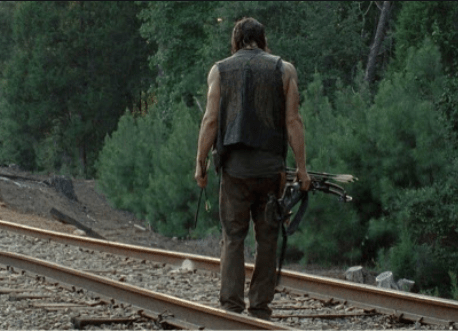
She imagines herself in “The Walking Dead” wandering the abandoned railway tracks with Daryl Dixon. Both on high alert, silent, listening for Walkers – the dead who feast on the living. Bow and arrows slung on sunken shoulders, a dead squirrel swinging from hip to hip whispering of dinner.
She hefts a backpack full of journals. He shakes his head and mutters, unable to understand her need to “scribble” long into the night under the star-shot sky. But for her, it’s part of her very breath – without it, she may as well be one of the infected with nothing more than the desire to mindlessly consume.
Enter 2020. Who would have guessed that her actual Zombie Apocalypse journals would be full of scribblings about toilet paper shortages, statistics, politics, and anxiety. Shuttered at home mindlessly watching CNN. Anderson Cooper, Chris Cuomo, and Don Lemon invited like family night after night into her living room. Her Facebook posts becoming a collection of memes designed to embrace and manage the absurdity of it all. Trying to teach small children trapped in tiny little boxes. How could 2020 bring in so many subplots, too many subplots? And whatever happened to the murder hornets?
She doesn’t eat squirrel, the dead don’t wander the street, but the world masks itself in fear. She lies in bed, listening to the rain, wrapped in freshly washed sheets, thankful that she found success earlier in the day in finding bananas, eggs, and milk – but still no toilet paper.
Perhaps she is infected. Not with COVID-19 (she had the nasal swab to prove it), but with something more insidious consuming her mind, eating away at her flesh. Worry, anxiety, fear, confusion, helplessness. So she writes and scribbles to prove she is still human. Of blue dawns and watercolour skies, of birdsong, and the colour green. Of cleaning with Lysol wipes. Of how each number flashed on the daily news represents a person, a real person. Of nightly cheers and echoes of gratitude spilling from highrises around the city. Of hummingbirds, and bee balm, and spider webs. Of a world that seeks to find new and unique ways to show beauty and resilience and innovation while breathing the pandemic-filled air.
Perhaps today she will wander the abandoned railway tracks watching for squirrels and then return home to eat her Kraft Dinner.
(Note – since writing this, the murder hornets made a brief reappearance in the news only to promptly vanish once again).

I am a perfectionist. I have always been a perfectionist. I will always be a perfectionist.
My perfectionism – at times my closest ally, and, at times, my fiercest enemy – moves me to explore and push myself beyond my capabilities, while simultaneously causing hopeless paralysis. Even in writing this, I wish to delete it all and start again rather than just try to get something on paper.
Years ago, someone offered me two pieces of advice that echo in my heart:
#1 Do the best you can with the time you are given.
#2 All projects are ultimately abandoned.
I am forever grateful for these two seemingly simplistic pieces of advice.
When I first started video-editing, I quickly learned that I had to abandon projects if anything was ever to be completed and released out into the world. This did not mean that my projects were haphazard, incomplete, or at a minimal standard of excellence. No, this meant that without a deadline, I would never complete any project, because I could endlessly “tweek” each tiny second of digital film until I died and still be unsatisfied with the result.
To me, the notion of “abandoning” a project saved my creative life (or rather, is still saving my creative life) because, at some point, I need to call something finished, or it will never be shared with the world. So, this year, I’m titling my 2018 #100DayProject……..#100DaysofAbandon:) – 100 days where I will work on unfinished projects, ultimately abandon them, and gratefully release them out into the world. Here’s to abandon!


The air wraps itself in the aroma of hope. I inhale, slowly and deeply, deliberately inviting the scent to revitalize every fissure of my being. The whole earth breathes a sigh of relief as winter surrenders to the awakening spring. I wander the paths of Garry Point Park surrounded by forgotten fragrances that at once intoxicate and invigorate. Birds chirp and flutter, declaring joy. My camera lens reaches to capture the pink cherry blossoms abundant with life as a gentle breeze swirls me into a snow-globe flurry of velvety-pink petals. Sunshine warms and revives the deeps fragments of my soul. The long, dark, dismal winter releases its grip, and soon, its effects will long be forgotten as every shade of green shouts in victory. The earth resounds with resurrection stories.

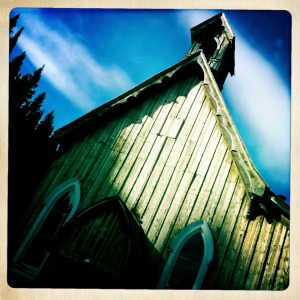 Sometimes shifts in thinking come from the most unusual places and most interesting people. A cemetery tour in Barkerville, led by a newly ordained minister, allowed me to ponder my faith in new ways. I admired not only his passion for history and easy manner, but there was something genuine and truly at peace about him – a rest evident in his eyes. I long for that kind of genuine rest in my tormented soul – for a faith that is so pure and complete that it shimmers and shines without a spoken word – a marrying of all worlds, both inside and out.
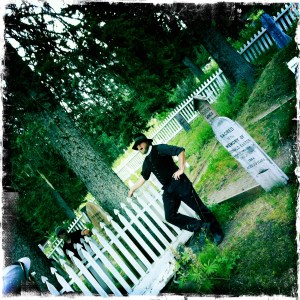
As Reverend Austin Spry spoke, I was haunted and stirred by the stories told at each grave site, many of them now merely anecdotes passed down from generation to generation – their full truth speculative at best. I wondered if the stories told were pleasing to those buried – if they accurately told of the double-edged elation and despair experienced in the harshness of the gold rush. It is not only gold that lingers in these hills, but the hopes, dreams, joys, and sorrows of those who lived and died in this land.
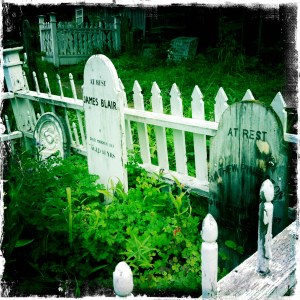 Many of the grave markers had the words “at rest” lovingly carved into them. I wonder how many of those buried in this cemetery are truly at rest, or even what that really means. It is difficult, if not downright impossible not to contemplate your own mortality, manner of death, epitaph, and lingering life story while standing amidst 150 years of history in a graveyard. Someday, will someone carve “at rest” as my epitaph? More importantly, will I ever find that peace while living – where people around me feel my rest, passion, faith, and genuineness without me even having to utter a word? I am convinced that will not happen until I can “marry” these fractured worlds that I attempt to live in all at once – like a time traveller pulled from century to century with no where to call home – trying desperately to fit in and understand at each new turn how to live, believe, and commune with the world. A chameleon in all respects – but even a time traveller and a chameleon have a natural state of rest or a place of belonging.


 As I stood in the cemetery listening to my guide, I realized that I do not feel that natural state, or that center that I so desperately need and desire. I recognize the need to be a chameleon, to wear different “hats” so to speak in different situations, but I think that some of my stress and exhaustion lies in the fact that my natural chameleon state does not exist; that I am a time traveller who has forgotten her home –that I do not have a center strong enough to stand in and just breathe. This is something to consider as I weave along this treacherous journey to find freedom in faith, thought, and life.
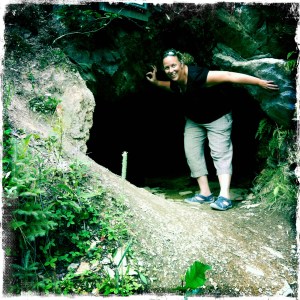
Perhaps one day, like Reverend Austin Spry, my life and manner will exude peace and rest. My faith will not feel like something foreign and just out of reach – like the gold veins lying 55 feet below the rocks, sand, water, and muck. And yet, perhaps there’s something to be said for hard work to find the gold buried deep within the earth – to find the mother lode takes commitment, a tenacity of spirit, and a half-crazed stubbornness. Do I have to work that hard?
On the flip side, perhaps faith is simply a matter of resting a bit, dipping your feet in the river to cool off after a long dusty walk, and finding hatfuls of gold nuggets shining up from the water below, just waiting to be scooped up by the handful. Or perhaps it is a blend of both worlds. Mostly my faith world feels like a big “humbug” or “bust” where nothing is found and I am cold, haggard, half-starved and penniless surrounded by others who have “struck it rich”. Maybe I need to work a lot harder to uncover the “gold”, or rest a lot more and observe the world around me to discover the “nuggets” just waiting below my weary feet. A bit of an oversimplified analogy, but one that warrants a bit of thought.
No doubt I am exhausted from wearing so many hats, changing colours at every whim, time travelling with nowhere to rest – no center – without it I am the most miserable and forlorn miner – like the only Catholic miner not buried on consecrated ground in the Catholic cemetery. His sin? Suicide. He gave up, life got too hard, his debts too great to bear, his claim producing nothing, no end in sight to his troubles. The irony? The day after his self-inflicted death, his claim hits pay dirt. The lesson? He only needed to hold on for one more day.
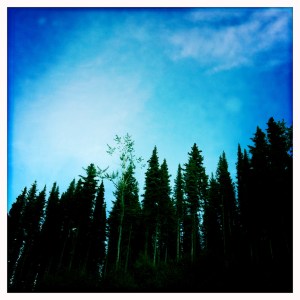
So, as I notice the kind, gentle eyes of this complete stranger of faith, I hold onto that notion and strike out on what will probably be an uncomfortable and arduous journey – where my worlds will need to change and be transformed if they cannot be reconciled. A journey where a metamorphosis of sorts needs to occur if I am brave enough to let go, and hang on at the same time – to sing in the dark and let things shift in the night. With this shift, perhaps one day both my life and my epitaph will cry out “at rest”.


There is nothing better in the summer than the filthy blackness of camping feet. Oh – I wore them like a true soldier as a child – the filthier, the tougher, the better. They were a badge of honour – collected throughout the days of running barefoot on sandy beaches, rock strewn roads, and dusty pathways.
Each toe was perfectly imprinted with the memories of the day – tag and make-believe, kite-flying, bubble-chasing, capture-the-flag and kick-the-can memories – of laughter and sometimes the bitter disappointment of losing the game, or a friend, or feeling that you didn’t quite belong. Yet, these blackened, dusty, calloused feet continued to faithfully walk, run, hop, skip, and sometimes even drag me along on my journey; step after step after step. And when the summer grubbiness was finally washed away – the memories remained – and those memories remain still, buried deep within my camping feet.

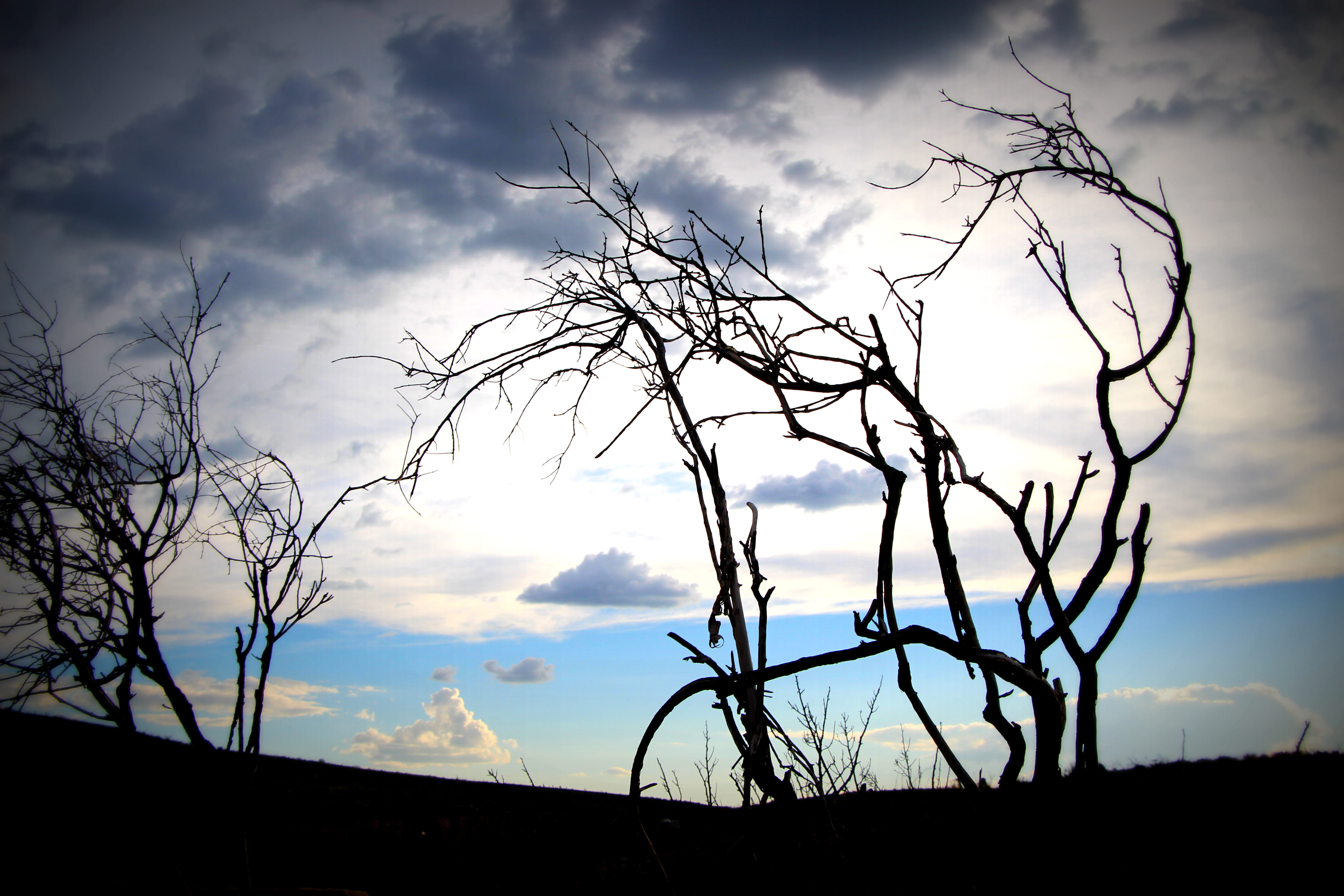
I first came across the phrase “Slouching Towards Bethlehem” as the title of an episode in a TV show called “Angel”. This spin-off of “Buffy the Vampire Slayer” tells the tale of a vampire with a soul seeking redemption for himself and others by “helping the helpless” and saving those who have lost their way. I slowly rolled the phrase “slouching towards Bethlehem” around in my mind. The title intrigued me – what does it mean to “slouch” towards Bethlehem?
In my mind I pictured a group of star-gazing travellers wearily making their way across a dry and thirsty land, longing for hope and light and peace and rest in a place where God made a way. A pilgrimage, where one abandons all else for a journey that is only conquered as one foot is dragged in front of the other – in short, a difficult journey, but one ending with the promise of the Bethlehem of Christmas, lit aflame by a brilliant guiding star, and all that it symbolizes.
But I was wrong, dead wrong. Wrong about the meaning, wrong about the image, wrong about the beauty of Bethlehem waiting at the end of the journey.
Upon doing some research, I found that the phrase “slouching towards Bethlehem” came from a poem by W. B. Yeat’s entitled “The Second Coming”. The following is the poem in its entirety.
The Second Coming
Turning and turning in the widening gyre
The falcon cannot hear the falconer;
Things fall apart; the centre cannot hold;
Mere anarchy is loosed upon the world,
The blood-dimmed tide is loosed, and everywhere
The ceremony of innocence is drowned;
The best lack all conviction, while the worst
Are full of passionate intensity.
Surely some revelation is at hand;
Surely the Second Coming is at hand.
The Second Coming! Hardly are those words out
When a vast image out of Spiritus Mundi
Troubles my sight: a waste of desert sand;
A shape with lion body and the head of a man,
A gaze blank and pitiless as the sun,
Is moving its slow thighs, while all about it
Wind shadows of the indignant desert birds.
The darkness drops again but now I know
That twenty centuries of stony sleep
Were vexed to nightmare by a rocking cradle,
And what rough beast, its hour come round at last,
Slouches towards Bethlehem to be born?
When I first read this poem, the last two lines struck at my heart.
“And what rough beast, its hour come round at last,
Slouches towards Bethlehem to be born?”
This poem is not about some lovely pot of gold at the end of the rainbow, but of a dreadful beast rising up just when you think things can’t get any worse. An article in “The Paris Review” describes the slouching beast. “Yeats’s beast, it must be said, isn’t deteriorating or dying in its slouching, as the many references to the phrase would have you believe; rather, it slouches in steady, dedicated progress toward a goal. It’s actually a terrifying sight: the poem’s narrator intuits that the beast is coming to wreak some untold havoc.” http://www.theparisreview.org/blog/2015/04/07/no-slouch/
This puts a whole new spin on my ideas and turns them towards a less than idyllic ending.
The internet, a faithful friend of information, told me that I was not alone in wondering about this phrase.
Research again from “The Paris Review” revealed that, “Yeats began writing the poem in January 1919, in the wake of the First World War, the Russian Revolution, and political turmoil in his native Ireland. But the first stanza captures more than just political unrest and violence. Its anxiety concerns the social ills of modernity: the rupture of traditional family and societal structures; the loss of collective religious faith, and with it, the collective sense of purpose; the feeling that the old rules no longer apply and there’s nothing to replace them…. (Sounds a lot like 2015 doesn’t it?)
Of course, twentieth-century history did turn more horrific after 1919, as the poem forebodes. The narrator suggests something like the Christian notion of a “second coming” is about to occur, but rather than earthly peace, it will bring terror. As for the slouching beast, the best explanation is that it’s not a particular political regime, or even fascism itself, but a broader historical force, comprising the technological, the ideological, and the political. A century later, we can see the beast in the atomic bomb, the Holocaust, the regimes of Stalin and Mao, and all manner of systematized atrocity.” http://www.theparisreview.org/blog/2015/04/07/no-slouch/
(…and I would add, terrorism.)
“The poem would have appeared to most observers to be a dark time of terrifying, even cataclysmic changes.”
In the episode of “Angel” with the title “Slouching Towards Bethlehem”, one of the character’s declares,“I have this horrible feeling that something bad is going to happen.” She is right. The show takes a turn towards betrayal, confusion, and “at the time humanity’s faithful anticipates their salvation, they meet with palpable doom” http://www.criticallytouched.com/angel/4x04_slouching_towards_bethlehem.php
So, what has happened to my nice little picture of journeying, Magi-like, towards Bethlehem, and the star, and the tiny baby in a manger? This image has been twisted into a nightmare of beasts crawling up from hell seeking whatever they can devour.
Interestingly enough, it is the image of this dark beast and the ensuing battle that draws me closer to the real light of Bethlehem. I am interested in W.B. Yeats and his stark poem – writing in a world as hurting and disillusioned as ours – a world where real beasts crawled and pillaged and ravaged the world. I am interested in vampires with souls and their battle cry for redemption of the world, even if they doubt redemption for themselves. I am interested in writers who describe themselves as atheists, agnostics at best, who have no place for God and yet cannot help but be compelled to write stories about good and evil and redemption and hope and light.
Perhaps this is where the “slouching towards Bethlehem” phrase has eventually led me. Bethlehem is indeed a place of light, but it is also a battleground where God chose to break through time and space and place his naked, vulnerable self in a manger. Perhaps seeing the beast slouch towards Bethlehem isn’t primarily about despair, but points to a light fighting against the darkness. Perhaps trying to explain planes crashing into towers, concentration camps, tsunamis, earthquakes, famine, ISIS, suicide bombers, Ebola, fleeing refugees, and cancer was never intended to be part of the school curriculum. But living in a world that hurts at every turn, also means that we have a world that can be helped and healed. Seeing a beast rise up means that we can also envision a Saviour.
So perhaps the phrase “slouching towards Bethlehem”, meant to be a cry of darkness and despair, begins to unfold and reveal itself to me as a journey towards light. In my exploration of “slouching towards Bethlehem” I have indeed come full circle, back to the Bethlehem full of stars and wonder and delight and redemption and Christmas spirit and Christ. Back to a Bethlehem that is worth the journey, no matter how dangerous the terrain or brutal the monsters.
I am reminded of a quote by C.S. Lewis that reads, “Since it is so likely that children will meet cruel enemies, let them at least have heard of brave knights and heroic courage.”
There are real beasts attempting to devour – we only have to examine our own hearts to find the beast “slouching towards Bethlehem” within – but in our redemption there is bravery and courage and faith – and the imagination to lean into the light of Bethlehem.
This Christmas, as I sing songs like “O Little Town of Bethlehem”, there will be a new meaning. A call to remember that Bethlehem was God’s battlefield – where He broke through and revealed himself in veiled glory amidst shepherds and angels and a bewildered young couple. But also a call to remember that Bethlehem is the battleground for our own hearts where we must seek the light within the muck and mire and manure of a stable. So let us be heroic knights and take courage. Let us continue to “slouch” towards the light for as John 1:5 powerfully proclaims, “The light shines in the darkness, and the darkness has not overcome it.”

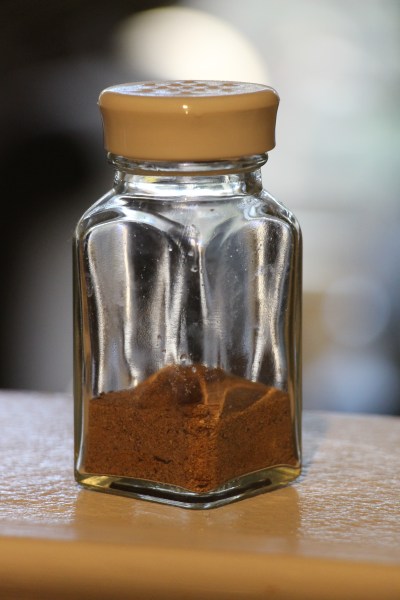
On my kitchen windowsill sits a Dollar Store saltshaker partially full of orange-ish dirt. Many mornings I don’t even notice its presence, but on the mornings that I do, I smile as it empowers me with secret strength and hope for my day. This little jar of “holy dirt” hails from Chimayo, New Mexico.
Over the past 3 summers I have made the journey to Sante Fe, New Mexico for The Glen Workshop; a Christian Arts Conference inviting artists and sojourners to explore art, faith, and mystery under a desert sky. The group of 200 or more come from within the wide reaches of the ecumenical Christian faith and explore dialogue that, although often challenging and foreign to me, echoes with the journey towards faith in God through an exploration of beauty.


Thursday was our day off at The Glen, and I had been invited to join a few newfound friends on a pilgrimage to El Sanctuario de Chimayo – a Roman Catholic Church and pilgrimage site deemed by Wikipedia as “the most important Catholic pilgrimage center in the United States.”
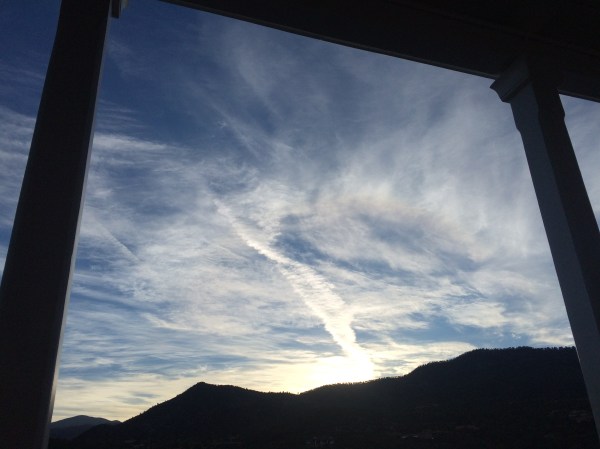
I awoke early and spent some time in the thin coolness of the birdsong-soaked air awaiting sunrise. I had heard whispers of Chimayo during my previous two years at The Glen, and was intrigued by this place where apparently crutches lined the walls announcing to the world of miraculous healings ascribed to the “holy dirt”. That morning, I did a Wikipedia search to find out more about this little town and pilgrimage site.
One of the legends (albeit simplified) is of a young friar who, in the early 1800s, saw a light shining from the hillside and, upon investigation, found a crucifix buried in the dirt. After three attempts to relocate the crucifix to a church in Santa Cruz, it always mysteriously ended up back in Chimayo. So, a chapel was built over the place where the crucifix was found, and later people started reporting miraculous healings attributed to the “holy dirt” in this area (hence the pilgrimages).
I am uncomfortable with relics and places ascribed with healing power, and yet, I was curious about what I would encounter in the mysterious high desert. After breakfast, we piled into our Texas-plated car and headed out onto the highway passing sagebrush dotted broken mesas. Our conversations deepened as the mesas gave way to deep, winding gorges along the Rio Grande and Santa Cruz rivers. Eventually we came to the dusty outskirts of the town of Chimayo.


As we wound our way down into the town and along a dirt road into the parking lot of El Sanctuario de Chimayo, I wondered how I should approach this site; as a tourist, or as a pilgrim. I climbed out of the air-conditioned car into the heat and decided I could be both. I would approach the area with quiet reverence and an open heart, and then take some photographs to help record and remember the journey.
The first thing I noticed were large hand-made crosses leaning up against a wooden fence. These crosses were carried, some from as far away as Albuquerque, New Mexico, during the Holy Week pilgrimage. Many of these wooden crosses were crudely made and most engraved with the names of loved ones, blessings, and the desire for hope and healing.


Adjacent to this wooden fence was a long chain-link fence covered in small crosses, rosary beads, and mini-statues – many handmade. A statue of Mary, draped in rosary beads, led the way along this path filled with remembrances of the prayers of the faithful. As I wandered along this path I was struck by the beauty of each untold story reflected in these items left affixed to the fence.


Just past the fence was the Prayer Portal, an open structure devoted to displaying the pictures and prayers of those who came to El Sanctuario de Chimayo in search of a miracle. My eyes glanced over the photos of loved ones, both young and old, posted on this wall, and again I wondered at their stories. So many told of tragedy and pain and yet reached out to God for healing and peace.


From the shade of the Prayer Portal we made our way back into the searing New Mexican heat, and wandered towards the actual El Sanctuario de Chimayo. The earth coloured adobe structure, with its bell towers, contrasted against the pale desert-blue sky. We meandered into the courtyard to the chapel entrance where a sign read, “No cell phones, no cameras, spend time with God.”


Once inside, I breathed in the beauty of this adobe church – the dark-wood crossbeams and pews, shimmering prayer candles, folk-art Stations of the Cross, and altar cloth and pieces. Two older women sat near the altar chanting the rosary in unison. We stood in silence and simply listened, unsure of what to do next.
A man approached and asked us if we wanted to go through to the room containing the “holy dirt”. We nodded and he led us past the chanting women and out of the main sanctuary to a small room on the left. The four of us entered the small adobe room together and gazed at the hole dug into the floor, complete with a tacky plastic yellow shovel, waiting for us to gather the “miraculous dirt”. The walls of the room were lined with framed verses, icons, and candles – most as tacky as the plastic shovel. A small window allowed sunlight to bathe the room in a soft orange glow. We each took turns with the dirt; picking it up, rubbing it in our fingers, each saying a silent prayer. I wasn’t exactly sure how to pray in this little room, but managed to mutter a few quiet phrases as I tucked a small shovel full of dirt into a folded piece of paper. (I hadn’t thought to bring a container with me to collect the “holy dirt”).
Once outside of the small dirt room we stood in an alcove lined with crutches, photos, and letters attesting to the miraculous healings people had experienced in this place. I didn’t expect any miraculous healing, but the experience did have a strange – “clearly this is out of my comfort zone” – level of sacred mystery to it.
We left the church, unspeaking, letting each person be alone with his or her thoughts and conclusions. As we wandered under the intense sun into the town above – I now began to photograph the church and its surroundings, a bit perplexed by the strange mix of the kitschy and sacred, but continually awed by the beauty of New Mexico.


The next day, during our Friday evening service, our spiritual director Deborah Smith Douglas spoke of her encounter with relics. In her homily, entitled “Burdens Lost, Chains Broken”, she told of how she had traveled to a church in Italy that claimed to hold under its altar the broken chains worn by Saint Peter. What caught my attention was when she revealed that her Presbyterian DNA didn’t know what to do with the notion of relics, but on that day, standing there, she suddenly realized that it didn’t matter if the broken chain relics were real or not, what mattered was what they represented; God’s ability to free people. She knelt and wept at the altar, realizing how much she needed God’s freeing power in her life. On that day, at a deep level, she realized that the altar built on broken chains became a sacrament – a glimpse of the liberating mercy of God.


This homily touched my heart as I realized that it didn’t matter whether a pile of dirt in a New Mexican desert had healing power or not. What mattered was what it represented: faith – the often gut-wrenching faith it takes to seek and trust God knowing that somehow, in the end, He holds the power of Story.
Over time, my tiny bit of “holy dirt” sitting on my windowsill has become a type of sacrament that makes me pause and reflect on the complex dance between faith and belief. It allows me to step forward and trust in the mysterious interweaving of my imperfect story with His Perfect Story. It reminds me to press into life and not be afraid – and, perhaps in this small way – this little jar of “holy dirt” has healing powers after all.
-Frederick Beuchner


 Seen. Known. Enough.
Recent Comments